
2025-2026
ACCESS'ART
Fourth Year of Dance Therapy
Our new program “ACCESS’ ART” invites participants to experience art as something born inside rather than performed outside. It’s not about technique or stage presence — it’s about listening to the body, finding your own rhythm, and allowing yourself to be. After years of exploring adaptation, integration, and personal sensations, this season is about becoming the creators of our own lives.
Art as inner movement, free and alive
Through four Dance Therapy sessions, we explore the body as a gateway, discover personal movement, create a supportive space and integrate experiences through creative reflection. Without rules or judgment, life experiences turn into authentic expression — every participant becomes a living work of art. The program also includes a dance workshop at the Musée d’Art Moderne in Paris, expanding this journey of freedom, improvisation and self-discovery.


ACCESS' ART
ACCESS’ ART is an interdisciplinary project by the Dance Therapy association, situated at the crossroads of dance therapy and visual arts. The project views art as an internal process of experience and transformation.
The program combines bodily practices, movement, photography, and collage, gradually transforming lived experience into images. The exhibition in Paris serves as both its culmination and its continuation: participants' works, artistic portraits, and video materials from the open museum workshop create a shared space of presence.
In this field, dance, imagery, and personal testimonies merge into a unique narrative — from movement to image, from individual experience to collective experience.
ACCESS’ ART — access to the art within.
Founder & Curator/Producer, Anzhela Itskovych
The Body as a Gateway
This first stage of the project invites us to return to the starting point : the body.
The work focuses on bodily awareness, grounding, and presence in the moment. The "here and now" emerges as the space where artistic experience is born.
The images presented in this section focus on fragments —gestures, textures, details. The body is not shown as a finished form, but as a living presence, to be felt rather than simply observed.
The body becomes an entry point — a space of perception, presence, and connection to oneself.
The body becomes an entry point.
A space of perception, presence, and connection to oneself.


Dancing Yourself
At this stage, the body enters into movement.
Dancing becomes a way of existing, of expressing oneself, and of meeting one another.
Through improvisation, experimentation, and freedom of movement, participants explored their own corporeality, trusting their impulses and discovering unique ways of moving. Dancing one’s being meant moving beyond roles and expectations, listening closely to the body, and letting the gesture emerge as a personal expression.
The photographs document this process, oscillating between experience and observation. Inspired by early photographic studies of movement, some images deconstruct the gesture into a succession of moments, revealing its internal dynamics, while others preserve the continuity of a living presence within the dance space.
Even within an individual experience, movement remains shared. To dance one’s being is to enter into relationship with others, where personal movement becomes an integral part of a collective process.


The Supportive Space

At this stage, attention shifts from the body to the space.
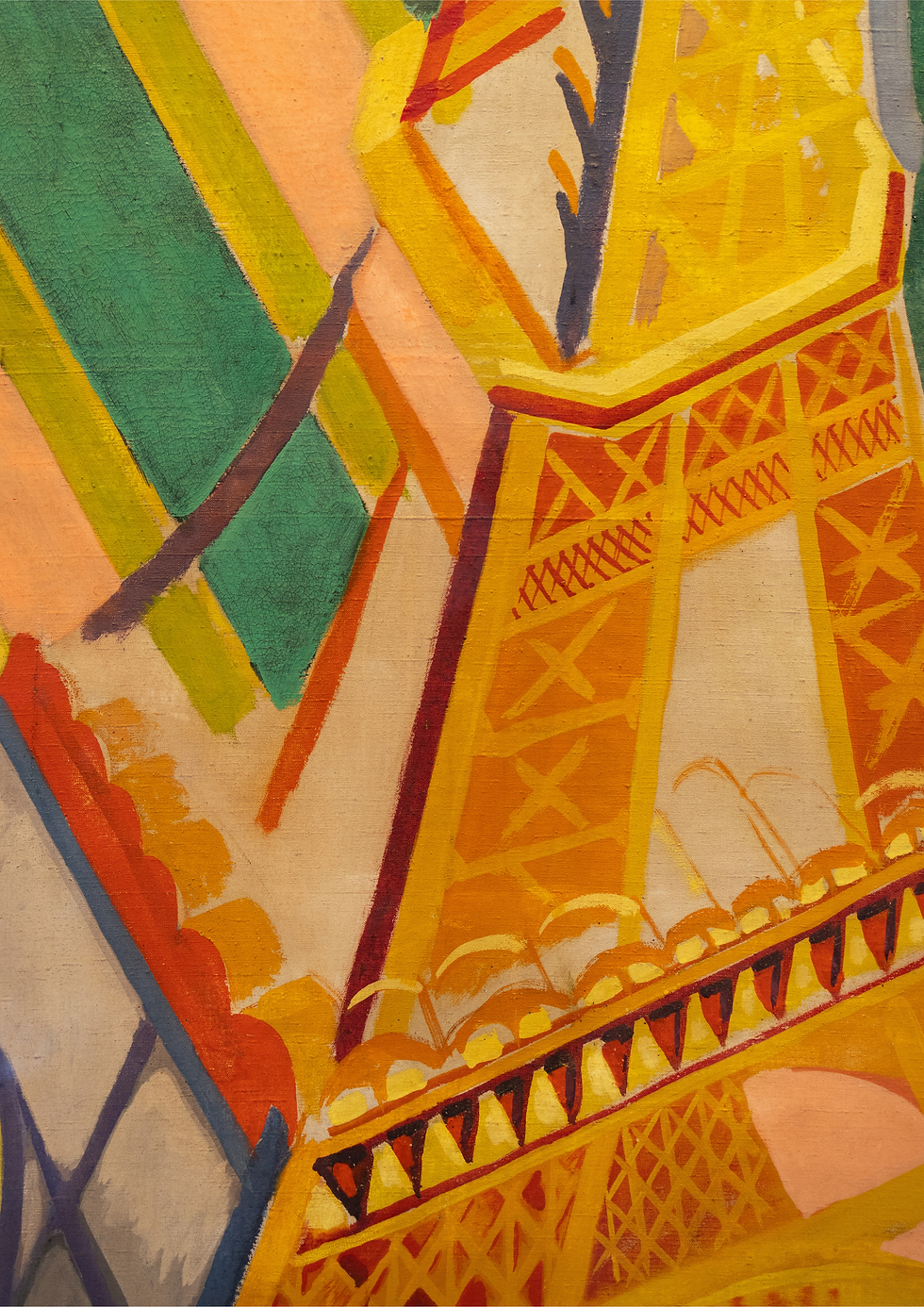
We explored space as a partner in movement, with which the body enters into dialogue. Music, light, color, and texture emerge as active elements of perception. They influence how the body moves, orients itself, and reacts. We observed how these qualities of space become subtle drivers of gesture, capable of inspiring, slowing down, or intensifying movement.
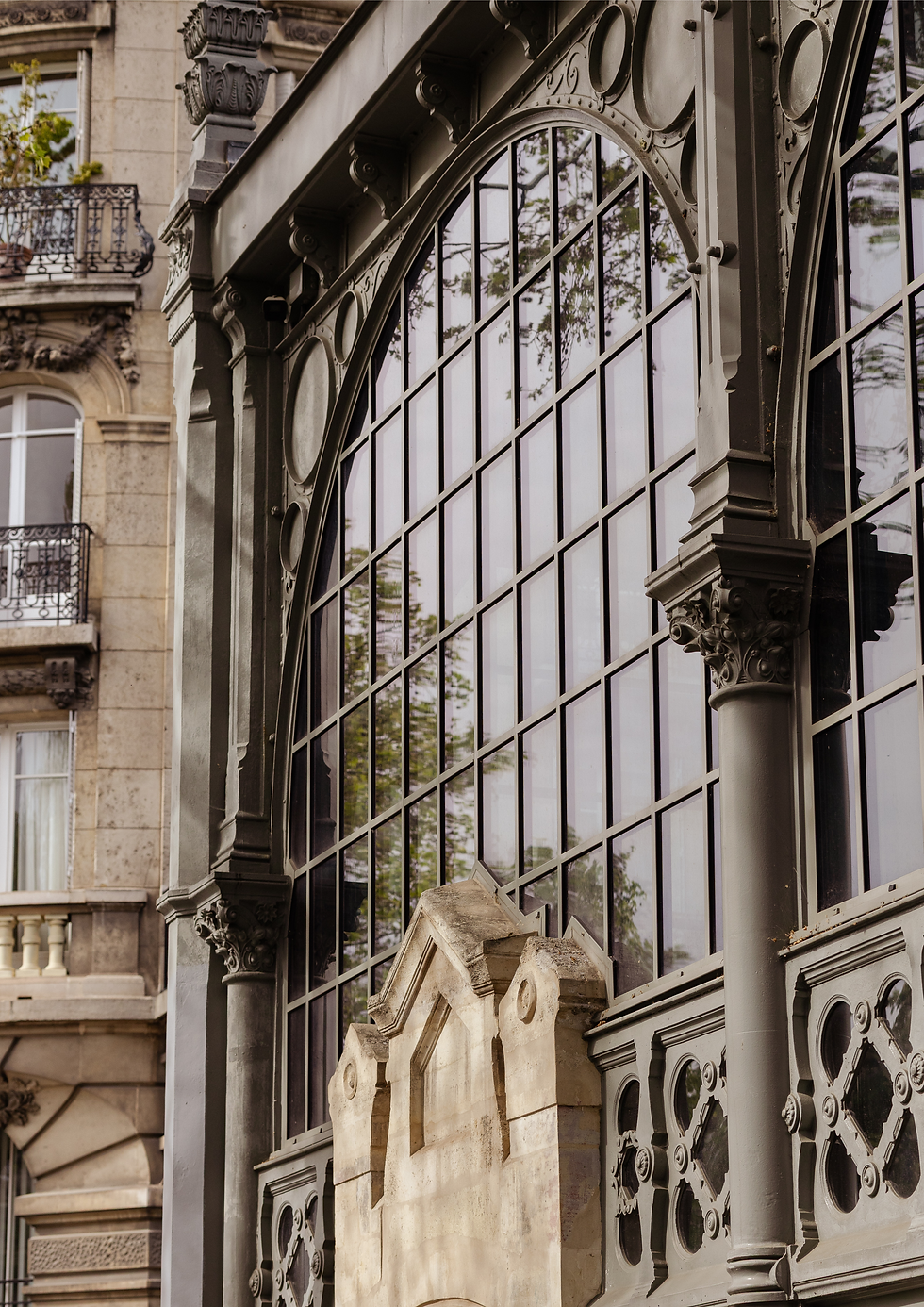
The images presented are composed of fragments of places — details, materials, lights. These spaces hosted the movement : the studio at Carreau du Temple, the Matisse room at the Musée d’Art Moderne de Paris, and the city of Paris itself where the project unfolded. The body is no longer directly present, but it remains as a trace.
Through these images, space becomes a memory of the gesture. It supports, contains, and makes the experience possible. These photographs offer another way of perceiving : feeling spaces as invisible partners of movement.




The Art within
In this final stage, you will discover the creations of the participants.
At this point in the journey, they have already come a long way within the ACCESS' ART project: three sessions at Carreau du Temple, as well as an initial meeting at the museum.
This stage marks the culmination of the photographic project "From Movement to Image" while being part of the broader ACCESS' ART Dance Therapy program. Each collage is accompanied by its starting point: two photographs — a portrait and an image in motion — taken during the second stage, "Dancing Yourself".
Using these images, participants were invited to create freely. Each person received their photographs along with various materials, transforming them according to their own feelings and intuition.
These works bear witness to a personal process, where the image becomes matter, and where movement is transformed into an artistic form.


Matisse : entering public space
The final stage marked an opening toward the outside world—an encounter with the museum and the public. The space of the Musée d’Art Moderne de Paris became a place of living interaction, where movement left the studio to become a shared gesture.
ACCESS’ ART is a dance therapy experience where art becomes a path back to oneself. Through movement and improvisation, participants explored how to "read" visual art with the body and resonate with Matisse’s universe.
At the end of the workshop, spectators were invited to join the dance, blurring the boundary between performers and the audience. In this common movement, a truth emerged: we are, ourselves, living art.


Credits
OUR TEAM
Anzhela ITSKOVYCH
Founder & Curator/Producer
Marie BERGER
Dance facilitation
Sylvie TIRATAY
Dance facilitation
Sandra BODIN
Dance facilitation
(Intern)
Katya BABASH
Photographer
Video
Viktoriia KUSH
Artist
PARTNERS
Ville de Paris
Carreau du Temple
Musée d’Art Moderne de Paris
Galerie Le Bonheur est dans l’Instant